Somewhere Along the Way, You Stopped Calling It a Flare-Up. They're Just "a Sensitive Dog" Now.
7 reasons the itching always comes back — and why no shampoo was ever going to stop it.
You didn't give up. You just ran out of things to try.
The medicated baths. The sprays. The fourth food switch. The thing that worked for three weeks, then didn't.
None of it ever got near the actual problem. Which is why it always came back.
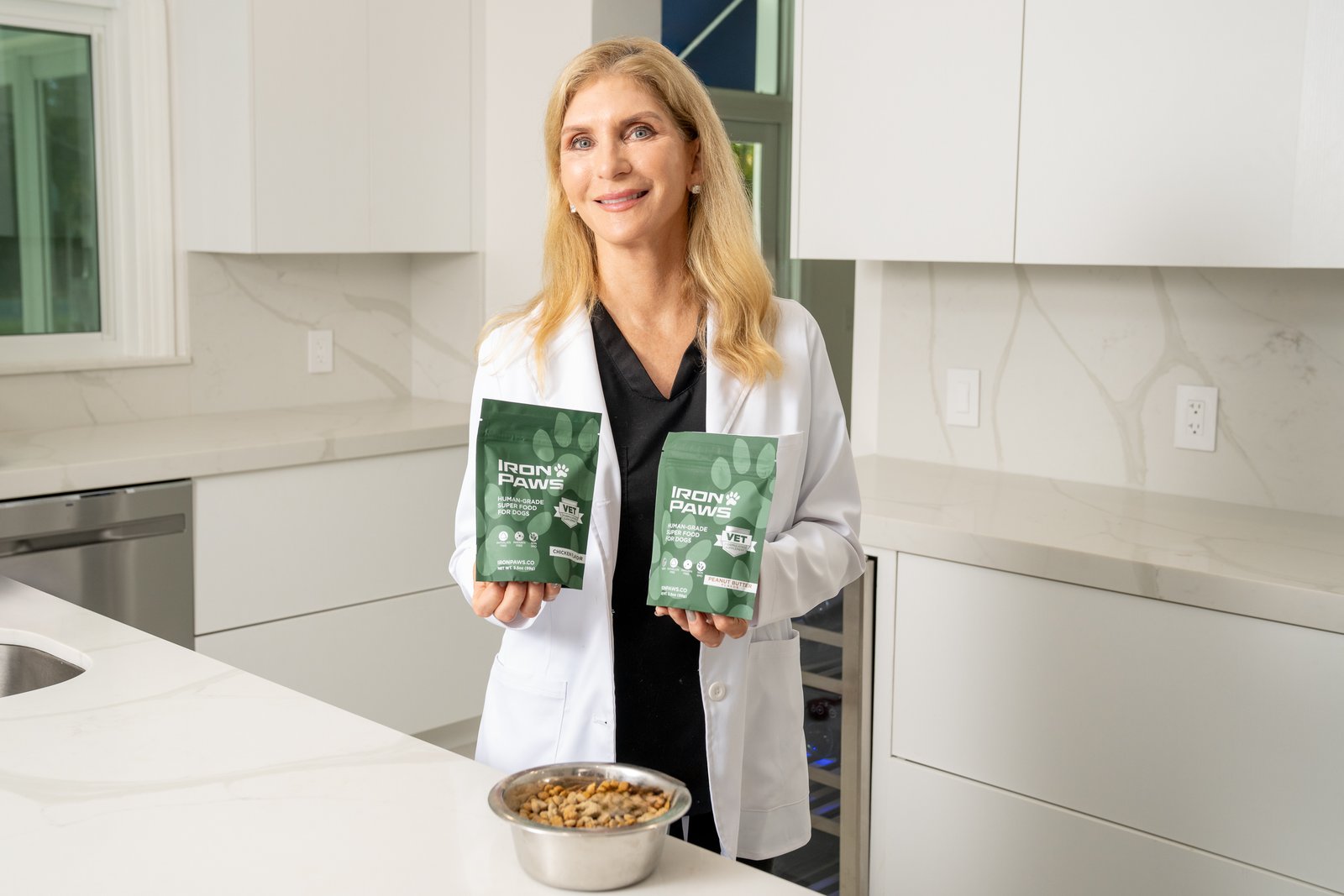
I'm Dr. Sharon MacIvor, DVM. In the next three minutes I'll show you why every one of those was aimed at the wrong place — and what I'd check before you buy anything else, including mine.
Your dog was never a "sensitive dog." They're a dog nobody ever treated in the right place.
1. Everything You've Bought Was Built to Stop at the Skin. The Problem Sits Underneath It.
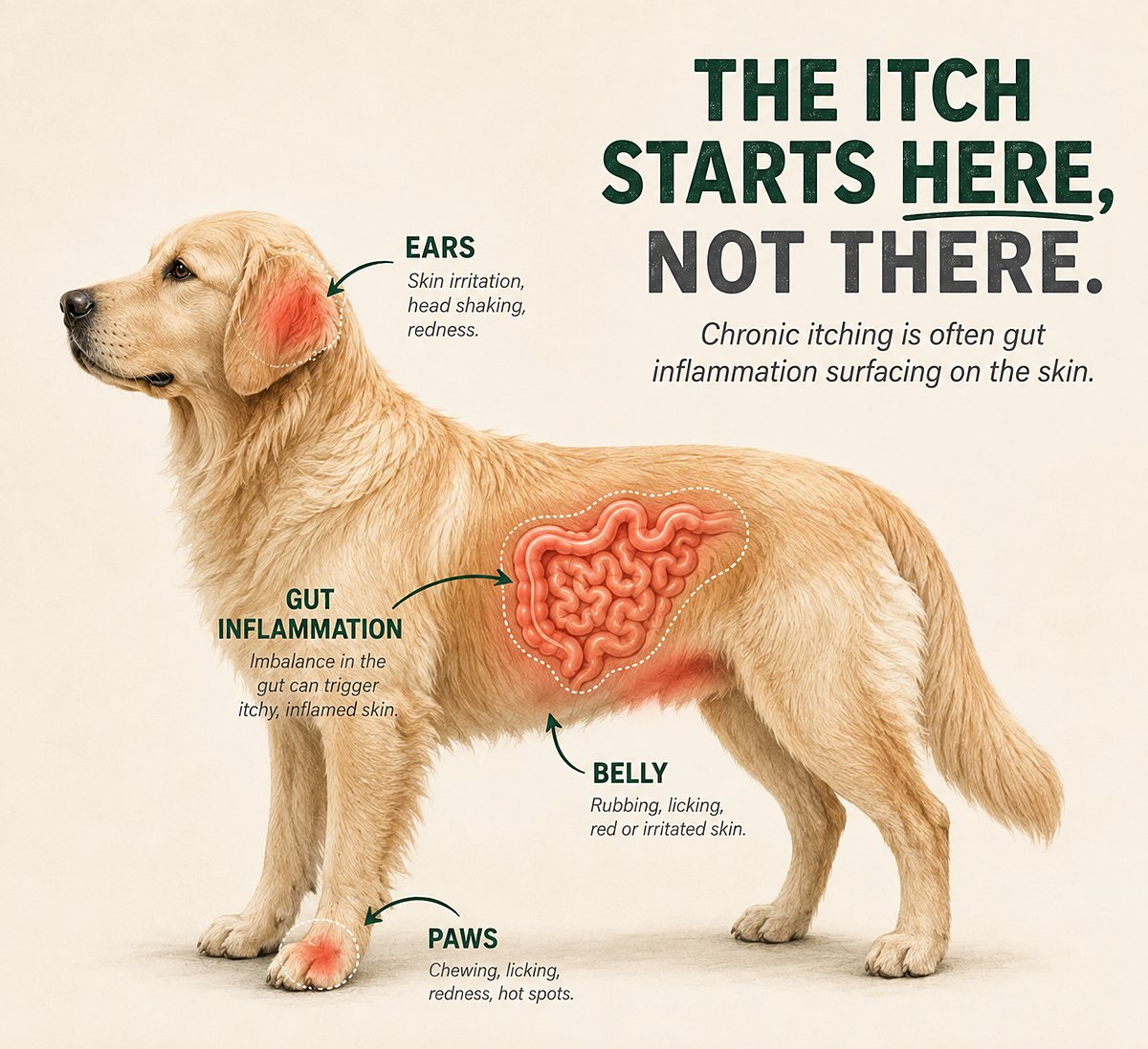
Every product in that cabinet was made for the outside — the shampoo, the spray, the wipe. That's where you can see the problem, so that's where the whole industry aims.
But none of it ever stopped the reaction. It stopped your dog feeling it for a while, or cleared the surface for a week. Underneath, their body kept reacting exactly as hard as before.
The itch is the smoke. Nobody ever went looking for the fire.
| What you've noticed | What's actually going on |
|---|---|
| The itch returns the same week the shampoo wears off | It never stopped. It was being covered up. |
| Paws licked raw, stained rust-brown, worse at night | The reaction surfacing where skin is thinnest |
| Ears that clear up, then come back in ten days | You cleared the surface. What feeds it sits underneath. |
| A yeasty, corn-chip smell from paws or ears | Yeast moving into space good bacteria used to hold |
| Dry, flaky skin and a coat that lost its shine | The skin barrier is stripped and isn't rebuilding |
| Reacting to grass, dust, a food you already switched | The body decides how hard to react — and it's set too high |
| Restless, panting, up scratching at night | An inflamed body doesn't switch off at bedtime |
2. Most of the Immune System Isn't in the Skin. It's in the Gut.
The majority of a dog's immune system lives in and around the gut.¹ That's the control room where their body decides how hard to react to everyday things — grass, dust, pollen, chicken.
Think of it as a sensitivity dial. On a healthy gut, the dial sits low: the body notices grass and shrugs. On a depleted gut, the dial is cranked to maximum — and everything sets it off.
Shampoos, sprays, and wipes don't touch the dial. They muffle the alarm.
Turning the dial down takes two things, not one:
The bacteria themselves. A probiotic. Most owners get this far.
Food for them. A prebiotic fiber. Bacteria with nothing to eat die within days — which is exactly why owners try a probiotic, see nothing, and conclude "gut stuff doesn't work." It did work. It was half the job.
Meanwhile, the skin your dog has right now still needs support while the gut rebuilds underneath — the barrier that scratching stripped away doesn't fix itself overnight.
3. Before You Buy Anything, Check It Against This. Including Mine.
Most of what's sold for itchy dogs fails on one of four things. Turn the bag over and check:
1. Does it feed the bacteria, or just add them? No prebiotic fiber listed means a colony with nothing to eat.
2. Is it a powder? A chew has to hold its shape, which means flour or starch — the exact thing the wrong microbes feed on. Treating the gut and feeding the problem in the same bite.
3. Does it support the skin they have now? Gut-only products leave them scratching for weeks while things rebuild underneath. Skin-and-coat nutrients should be on the label too.
4. Are the ingredients printed — including the probiotic strains? "Proprietary blend" means they don't want you to know. Real formulas name everything, down to the exact strain of bacteria.
Then two honest things. It has to go in every day, because bacteria you stop feeding are gone in days. And it takes weeks, not days — anything promising faster is selling you another muffler for the alarm.
I couldn't find one on a shelf that passed all four. So I formulated one.
4. It's Called Iron Paws.
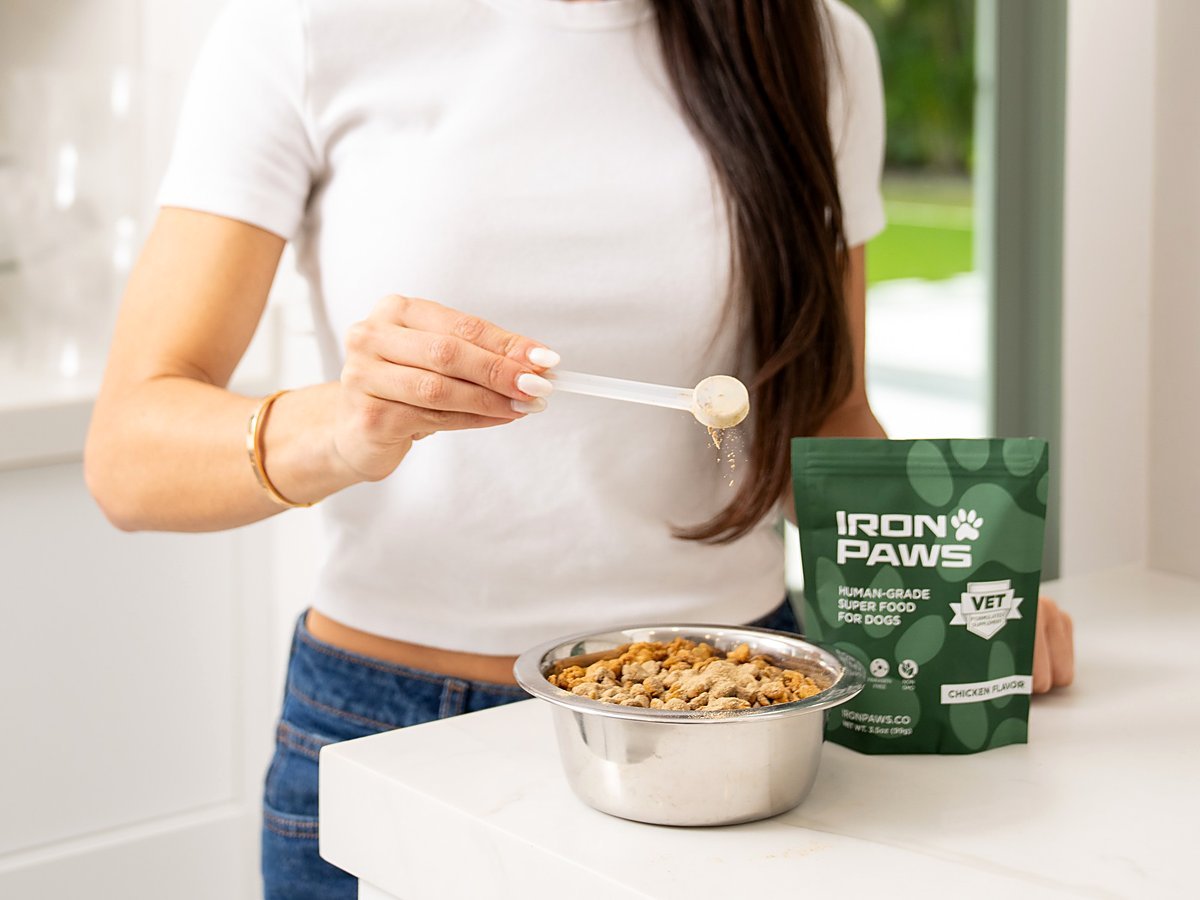
Run it through the checklist yourself.
The fiber is there. Chicory root, oat beta glucan, and dandelion — three separate prebiotic sources feeding the colony so it holds instead of starving off in a week.
The bacteria are named. Bacillus subtilis MB40 and Bacillus coagulans IDCC 1201 — two research-backed strains printed on the label, not an anonymous "probiotic blend."
It's a powder. Nothing has to bind it — no flour, no filler starch, nothing feeding the problem you're fixing.
The skin gets its own support. Spirulina, burdock root, kale, and spinach working on the skin and coat they have right now, while the gut rebuilds underneath.
Everything is printed. All 20 active ingredients, listed by name on the label. No proprietary blends, no hiding. Flip the bag and read all of it — which is exactly what I just told you to do with anyone's product, including mine.
And because it's an all-in-one daily, the same scoop is covering digestion, dental health, immunity, and energy. One product, one scoop, on the food they already eat.
Formulated by me. Manufactured in an FDA-registered facility in New Jersey, third-party tested every batch, made following GMP guidelines. Chicken or peanut butter flavored, because a formula they spit out helps nobody.
🐾 Special Savings for Our Readers
As of this writing, Iron Paws is running its best publicly available offer — 25% off your first order when you subscribe, with subscriber pricing on every order after. We can't promise how long the brand keeps first-order pricing this low; if the offer changes, we'll update this section.
Iron Paws Daily Superfood
- 20 human-grade superfoods in one daily scoop
- Calms the reaction at the source — the gut, not the skin
- Chicken flavor dogs actually eat — just scoop it onto their food
5. What the First 90 Days Usually Look Like
Weeks 1–2 — the first signs are inside
The gut settles before the skin does: firmer stools, less gas, less rumbling after meals. They'll still be scratching, and that's normal — the colony is only just taking hold.
Weeks 4–6 — the scratching starts to ease
Less frantic chewing at the paws. Redness fading instead of spreading. Longer gaps between flare-ups.
Weeks 8–12 — comfortable in their own skin again
Fur filling back in where it was chewed thin. Coat holding its shine. And you stop bracing every time they settle down to scratch.
The one thing that stalls it: skipping days. The bacteria only hold while they're being fed. This works as their one daily thing, not a now-and-then.
"Sig and Bella love their Iron Paws. Their coats are shiny and not itchy. Sig is a lab who had hot spots — thanks to Iron Paws, he no longer has an issue. A sprinkle at breakfast and dinner really makes a difference in their skin and breath."
"Venom (blue pit) went from itchy skin and sores, to his fur growing back and his itching almost disappeared in the first month of using! Thank you! This really helps!"
6. Why I Put My Name on This
After years in practice, most of what I could reach for was managing the symptom — and I watched owners cycle through the same cabinet of half-fixes I would have handed them.
This is why I co-founded Iron Paws instead of licensing my name to someone else's formula. I wanted the thing that gets at what's setting the reaction off, supports the skin they've got in the meantime, and doesn't quietly feed the problem with binder starch.
One scoop over dinner. Not another pill hidden in cheese. Not another bath they hate.
They've spent long enough uncomfortable in their own skin. A few weeks is nothing next to that.
— Dr. Sharon MacIvor, DVM
7. They Were Never a "Sensitive Dog." Start With the Gut.
Nobody ever told you they were a sensitive dog. You worked it out yourself, after the fourth thing didn't hold.
Picture a Tuesday three months from now. They're asleep at your feet, still — and you're not waiting for the scratching to start.
That's the whole thing. Not a different dog. Just their body reacting the way it should, and their coat back to what it was.
That's a full three months to test it, covered. I'd rather you test it than think about it. Nothing changes while it's a maybe. Same dial, same reaction, same dog scratching tomorrow.
CHECK AVAILABILITY AT IRONPAWS.CO →Frequently Asked Questions
How do I give Iron Paws to my dog?
How long until I see results?
Is it suitable for all dogs?
What if my dog is a picky eater?
How is it tested for safety?
Are there any side effects?
90-Day Money-Back Guarantee
If your dog doesn't love Iron Paws, they'll refund your purchase. No questions asked.
GET IRON PAWS →- Vighi G, Marcucci F, Sensi L, Di Cara G, Frati F. "Allergy and the gastrointestinal system." Clinical & Experimental Immunology. 2008;153(Suppl 1):3–6.