You've Started Holding Your Breath When Your Dog Gets Close.
7 reasons the smell keeps coming back — and why it was never about their teeth.

It happens before you can stop it. They jump up, thrilled to see you, and your head turns on its own. Then you feel guilty about it for the rest of the night.
You've done the dental sticks. The water additive. Maybe a $600 cleaning under anesthesia. And the smell came back every single time.
So you've quietly stopped expecting anything to work. And honestly? You'd be right — if the problem were their teeth.
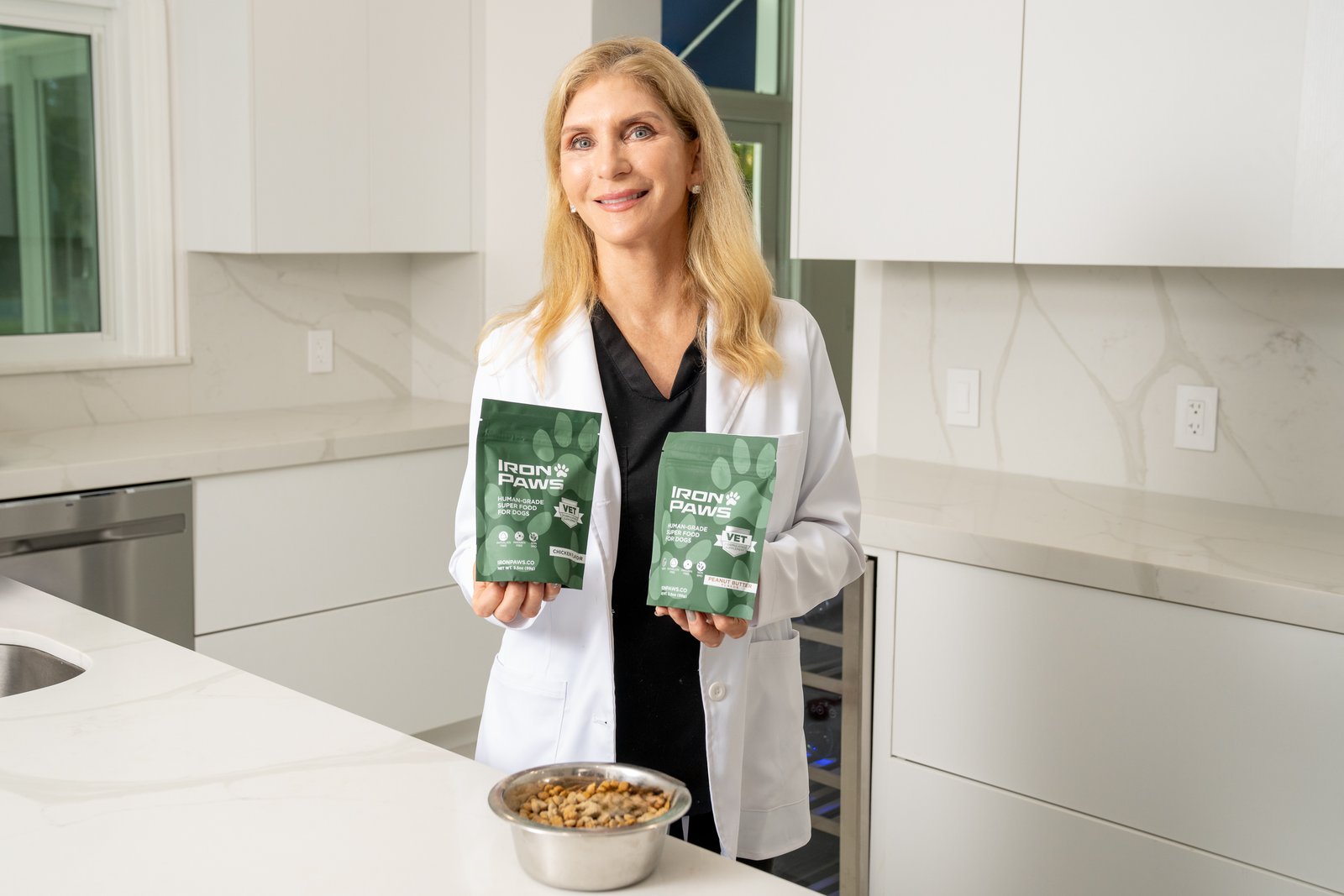
I'm Dr. Sharon MacIvor. I'm a veterinarian, and I spent years watching owners spend hundreds of dollars treating the wrong end of this problem — because the wrong end is where all the products are sold.
Here are the 7 things that actually decide whether the smell stops.
1. The Smell Isn't Made in Their Mouth. It's Made in Their Bowl.
Spraying air freshener over a full trash can doesn't empty the trash can.
That's what a dental chew is doing. Your dog's mouth isn't the source of the smell — it's just the vent.
Most commercial kibble is cooked at extreme heat and bulked out with cheap starch, because starch is shelf-stable and profitable. A lot of that starch never fully digests. It sits in the gut and ferments, and the bacteria feeding on it release sulfur compounds — that warm, swampy smell that rises back up hours after they ate.
Which is why the breath is rotten again twenty minutes after the dental chew.
You didn't fail. Every product in that aisle was built on the same wrong assumption.
| What you've noticed | What's actually going on |
|---|---|
| Breath smells rotten again within an hour of a dental chew | You cleaned the vent. The source is a foot below it. |
| Gas, bloating, gurgling stomach after meals | Undigested starch fermenting instead of breaking down |
| Soft, loose, unpredictable stools | The gut can't keep up with what's in the bowl |
| Eating grass, licking carpet, chewing at nothing | Instinct saying something down there feels off |
| Dull coat, dry skin, flakes on the bed | They're eating the food — they're not absorbing it |
| A "corn chip" smell from paws and ears | Yeast feeding on the same undigested starch, different exit |
| Slower, flatter, less excited about things they loved | What happens in the gut doesn't stay in the gut |
2. The Question That Changed How I Practice: Why Don't Dogs in Japan Have This?
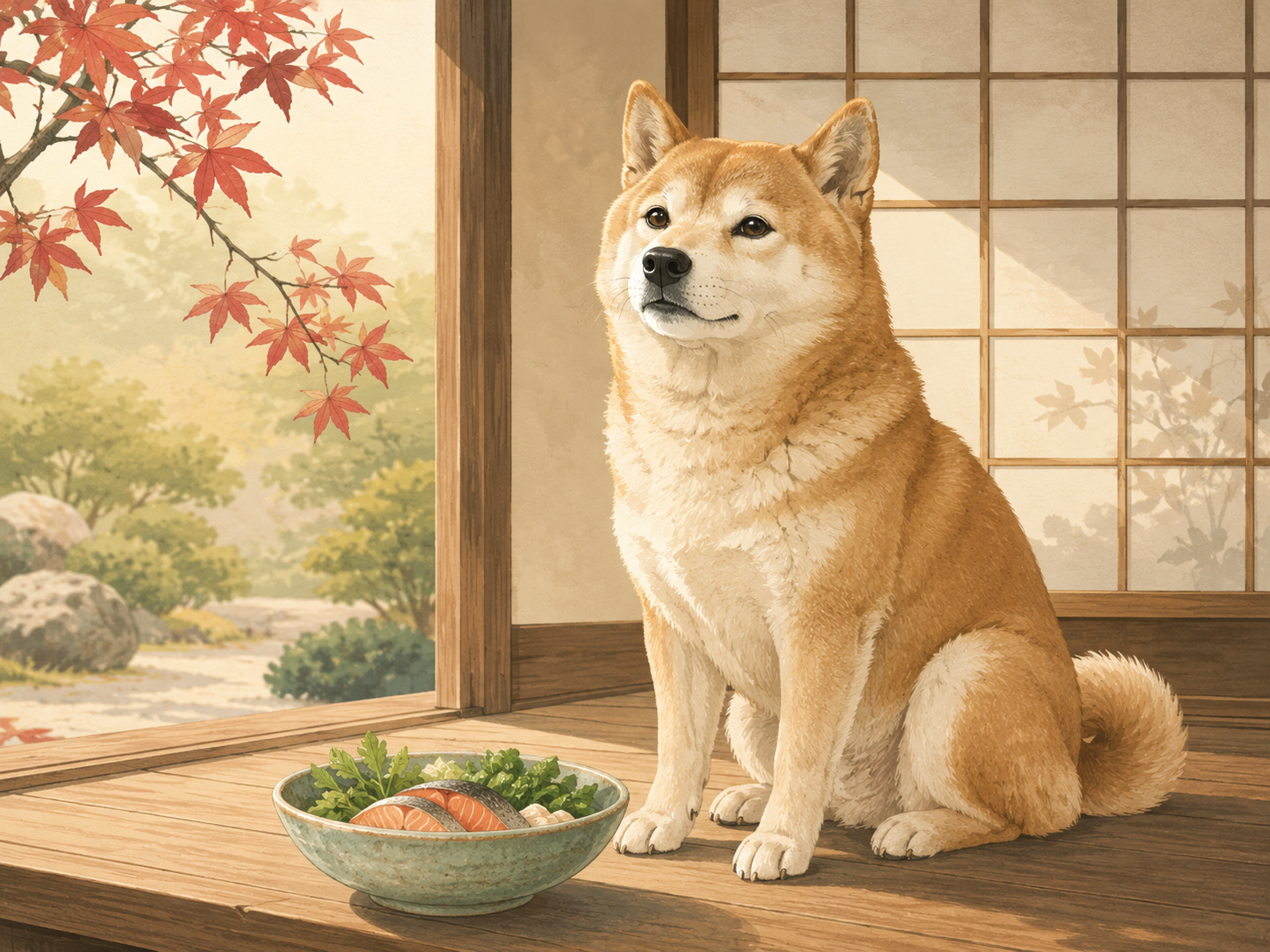
Here's what sent me down this road years ago: dogs in Japan routinely live into their late teens — meaningfully longer than the average American dog. Same breeds. Same genetics. Different bowls.
Japanese dog diets lean heavily on fresh food, fermented foods, and greens — the exact things that feed a healthy gut. The chronic "dog breath" American owners treat as normal is far less common there.
That's not a coincidence. Bad breath isn't a dog thing. It's a diet thing. And it's one of the earliest, most obvious signals that the gut is struggling — which matters for a lot more than the smell.
3. You Have to Clean It Where It's Made
Two things need to happen down in the gut — not in the mouth.
First: neutralize the gas that's already being made. Chlorophyll — the green pigment in plants — binds sulfur compounds in the gut before they can rise. Chlorella, spirulina, parsley, and wheatgrass are among the densest sources of it on earth. This is why "greens" isn't a gimmick here. It's the mechanism.
Second: make less gas in the first place. Sulfur is made by the wrong bacteria. Feed the right ones — with real prebiotic fibers like chicory root — and add live probiotic cultures, and the good bacteria crowd out the bad the way thick grass chokes out weeds.
Neutralize what's there. Make less of it. That's the whole model.
Simple enough that you'd think everything on the shelf would do it. Almost nothing does. Here's why.
4. Why the Pet Aisle Can't Sell You This
I'll tell you what the industry doesn't put on the label, because I formulated against it on purpose.
Flip over any dental chew or "breath treat." The first ingredients are almost always flour and starch. Not because anyone's evil — because a chew physically needs starch to hold its shape. The format dictates the ingredients.
Which means the standard fix is made of the exact thing the sulfur-producing bacteria eat. You're treating the gut and feeding the problem in the same bite.
The only way around it is a loose powder with no binder at all — where every gram is an active ingredient and nothing is structural filler. That's the harder, more expensive way to make a product. It's also the only way that made sense to me as a vet.
5. It's Called Iron Paws
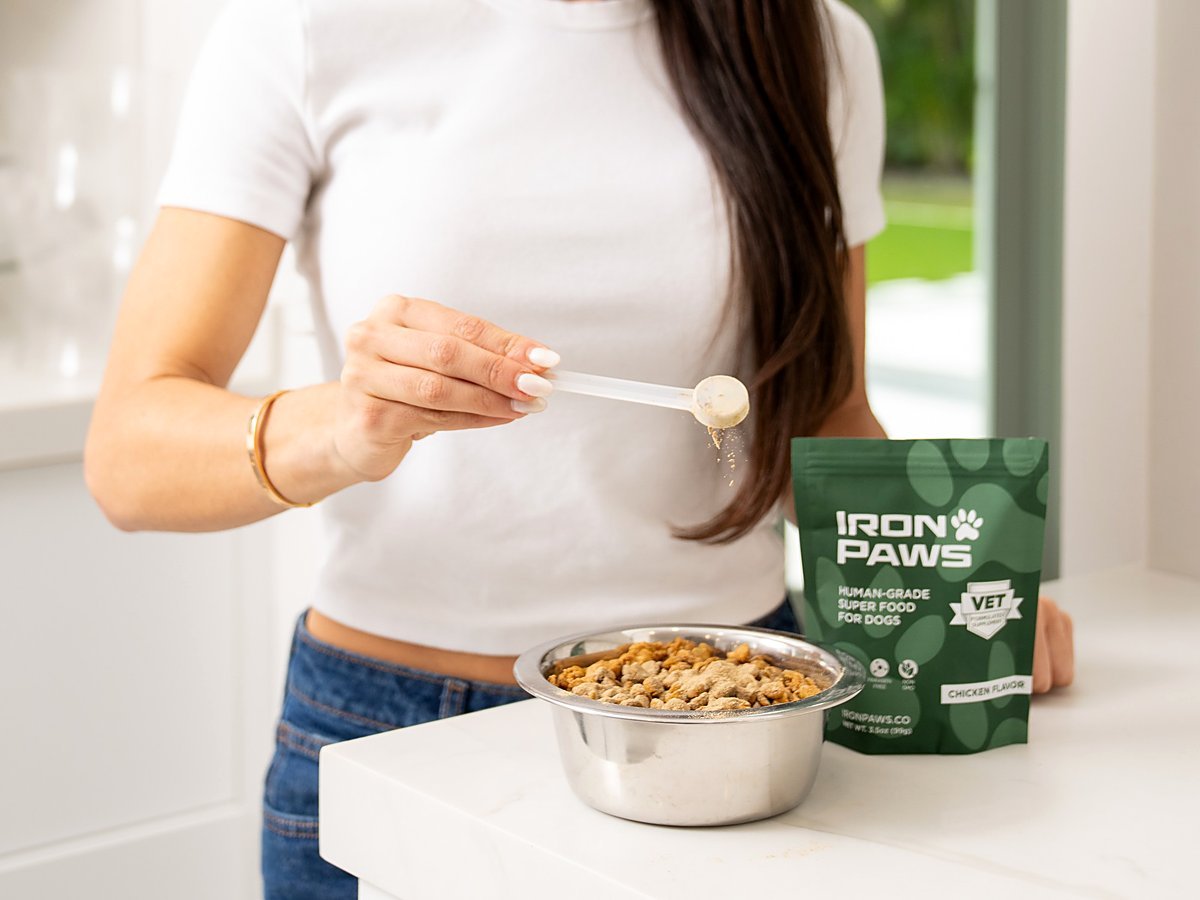
One scoop of human-grade superfoods over whatever they already eat. 20 active ingredients. No fillers, no binder starch, no artificial preservatives. And because it's an all-in-one daily, the same scoop working on the breath is also covering skin and coat, digestion, immunity, and energy — you're not stacking four products.
For the smell specifically, every ingredient is doing one of two jobs:
Notice the probiotic strains are named. That matters. "Proprietary probiotic blend" on a label means they don't want you to know what's inside. Every one of the 20 ingredients in Iron Paws is printed on the bag — flip it over and read all of it, which is exactly what I'd tell you to do with anyone's product.
Formulated by me — not licensed from a co-packer's catalog. Manufactured in an FDA-registered facility in New Jersey, third-party tested every batch, made following GMP guidelines. Chicken or peanut butter flavored, so it disappears into breakfast and you never think about it again.
One scoop, once a day, on their normal food. That's the entire routine.
🐾 Special Savings for Our Readers
As of this writing, Iron Paws is running its best publicly available offer — 25% off your first order when you subscribe, with subscriber pricing on every order after. We can't promise how long the brand keeps first-order pricing this low; if the offer changes, we'll update this section.
Iron Paws Daily Superfood
- 20 human-grade superfoods in one daily scoop
- Targets the source of the smell — the gut, not the mouth
- Chicken flavor dogs actually eat — just scoop it onto their food
6. What Actually Happens, Week by Week
Nothing changes overnight, and anyone promising otherwise is selling you another air freshener. Here's the honest version.
Weeks 1–2
The gut shifts first. Most owners notice digestion settling — less gas, less gurgling, firmer stools — and many notice the breath beginning to change before anything else.
Weeks 3–6
The smell fades gradually — which is exactly why owners often don't notice until someone else points it out. This is also when coat and energy changes tend to start.
Weeks 8–12
Balanced enough to hold. Steady breath, steady digestion — and you've stopped thinking about it.
One thing worth saying plainly: skipping days is what stalls this. Bacteria you stop feeding die back within days. It works because it's daily.
"Our dog is 11 years old and not only was her breath so bad, her joints are old. We could start to tell a difference within a few days. Her breath is so much more manageable. She also loves it and looks forward to it every day."
"My dog had extremely bad breath. Since I started giving her Iron Paws, her breath is fresher, her skin is so soft and she seems to have more energy. I recommend it to everyone."
7. They Don't Know You've Been Keeping Your Distance

They just know you don't lean in the way you used to.
Picture a Tuesday two months from now. They jump up next to you and you don't move — because you're not thinking about it at all. That's the whole goal. Not a dramatic before-and-after. Just your dog back at normal distance.
That's a full three months to test it — half a dollar and change a day, against a smell you've been managing for years. I'd rather you test it than think about it. Nothing changes while it's a maybe. Same bowl, same starch, same smell tomorrow morning.
— Dr. Sharon MacIvor, DVM
CHECK AVAILABILITY AT IRONPAWS.CO →Frequently Asked Questions
How do I give Iron Paws to my dog?
How long until I see results?
Is it suitable for all dogs?
What if my dog is a picky eater?
How is it tested for safety?
Are there any side effects?
90-Day Money-Back Guarantee
If your dog doesn't love Iron Paws, they'll refund your purchase. No questions asked.
GET IRON PAWS →